
 Add to
 The Internet’s Silent Crowds: How Social Browsing Turns Every URL Into a Shared Space

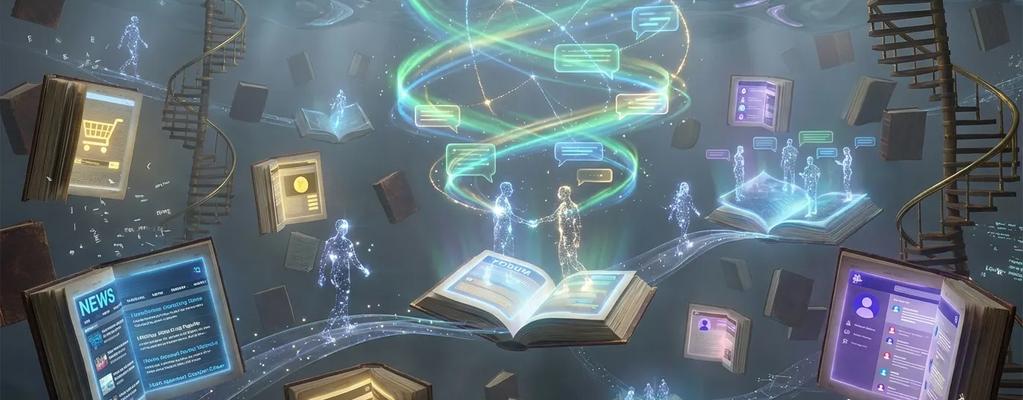
Picture this: It is late at night. You are reading a breaking news story about a major global event. The article is gripping, perhaps even a little terrifying. You glance at the view counter on the page; it indicates that 250,000 other people have read this article in the last hour.
Right at this very second, hundreds of other humans are staring at the exact same paragraph you are. They are feeling the same shock, the same curiosity, or the same excitement.
Yet, sitting there in the glow of your monitor, you are completely alone.
To share this moment, you have to break the spell. You have to copy the link, open a separate tab for X (Twitter), Reddit, or WhatsApp, paste the link, and shout into the void, hoping someone replies. By the time they do, the moment has passed. The context is broken.
But what if you didn't have to leave? What if you could instantly connect with those hundreds of people right there, on the page?
This is the promise of the modern social browsing extension. It is a shift in how we view the web—not as a library of static documents, but as a series of living rooms. Enter Poppin, the tool that is finally building the internet's missing community feature.
The Isolation Problem: Why the "Connected" World Feels So Lonely
We often call the internet the "World Wide Web," implying a vast, interconnected network. But structurally, the web has evolved into a series of isolated silos.
The Statistics of Digital Isolation
We are spending more time online than ever before. Global averages suggest users spend upwards of six and a half hours a day connected to the internet. However, the vast majority of this time is passive consumption. We scroll, we read, we watch.
The interaction—the "social" part of social media—is gated behind specific walled gardens. You consume content on the Open Web (news sites, blogs, stores), but you are forced to discuss it on closed platforms (Facebook, Discord, Slack).
This separation creates a jarring "context gap."
- The Consumption Layer: Where you absorb information (The New York Times, Amazon, Wikipedia).
- The Discussion Layer: Where you talk about it (Social Apps).
The Friction of Context Switching
This architecture forces users into a constant state of "context switching." Every time you want to discuss what you are seeing, you have to leave the environment. This friction is the enemy of spontaneous connection.
If you are laughing at a funny line in a blog post, are you really going to go through the effort of sharing it to a social feed just to say "LOL"? Probably not. You just chuckle and close the tab. That potential human connection is lost forever.
The internet is suffering from a lack of ambient social presence. In the physical world, if you stand in a crowded square, you feel the energy of the crowd even if you don't speak. On the web, every page feels like an empty room, regardless of how many millions of people are visiting it. We need a webpage social layer to bridge this gap.
The URL Revolution: Turning Addresses into Meeting Places
The solution to this isolation isn't another social media app. The solution is to transform the browser itself. This is the core concept behind a URL community platform.
The philosophy is simple: The URL is the location. If you and I are both visiting netflix.com/watch/12345, we are effectively in the same digital room. We just lack the window to see each other.
How Poppin Works: The Social Layer
Poppin functions as a social browsing extension that unlocks this hidden potential. It creates a "meta-layer" over the existing internet.
Using advanced browser overlay technology, Poppin sits lightly on top of any website you visit. It does not alter the website's code; rather, it acts like a transparent sheet of glass placed over a painting—you can draw on the glass without ruining the art.
The Tech: Real-Time and Peer-to-Peer
This isn't just a comments section that loads slowly. Poppin utilizes WebSocket connections to establish a persistent, low-latency link between users on the same URL. This enables peer-to-peer web chat that happens in real-time.
- Dynamic Lobbies: When you navigate to a page, Poppin checks "Who else is here?" and instantly places you in a chat lobby with those specific users.
- Fluidity: As you navigate from a news site to a shoe store, your "social room" updates instantly. You are surfing the web, but you are effectively surfing through a series of dynamic chat rooms.
This enables contextual social networking. You aren't chatting with your friends list (who might not care about what you are reading); you are chatting with people who are currently interested in the exact same thing you are.
Transformative Use Cases: More Than Just Chatting
When you give users the ability to chat on any website, you unlock utility that goes far beyond idle chit-chat. Real-time website communities have the power to revolutionize major industries.
Here is how a browser extension for social interaction changes the game across different verticals:
1. E-Commerce: Shop with Friends (Finally)
Shopping is inherently social. We ask friends for advice; we people-watch in malls. Online shopping stripped that away—until now.
- The Scenario: You are looking at a pair of hiking boots on an outdoor retailer’s site. You are unsure about the sizing.
- The Transformation: You pop open the chat. You see 15 other people viewing this product. You ask, "Has anyone bought these? Do they run small?"
- The Result: Instant feedback from active shoppers. You can also invite a friend to the URL and "walk" through the store together, page by page, discussing items in the overlay without sending links back and forth on WhatsApp.
2. News and Media: The Instant Town Hall
Comment sections on news sites are notoriously toxic and slow. They are often buried at the bottom of the page, disconnected from the text.
- The Scenario: A controversial political speech is transcribed on a news site.
- The Transformation: The Poppin overlay becomes a live town hall. Readers are debating specific paragraphs as they read them.
- The Result: The discussion is grounded in the text. It creates an instant discussion forum that is relevant to the now, not a comment thread that stretches back three years.
3. Educational Content: The Global Study Group
The internet is the world's greatest library, but it lacks a study hall.
- The Scenario: You are struggling through a complex tutorial on Python coding or a dense Wikipedia entry on Quantum Physics.
- The Transformation: You see other students are present on the page. You ask for clarification on a concept.
- The Result: Co-browsing experiences turn solitary learning into collaborative discovery. You find study partners who are learning the exact same topic at the exact same moment.
4. Entertainment: Decentralized Watch Parties
Streaming services have tried to build "watch party" features, but they are walled off. Disney+ watch parties only work on Disney+.
- The Scenario: A new music video drops on YouTube, or a niche documentary is hosted on a small independent site.
- The Transformation: The URL becomes a theater. Fans gather. The chat flies by with reactions, theories, and excitement.
- The Result: A shared cultural moment that feels like a live premiere, regardless of where the video is hosted.
Privacy & Implementation: A User-First Approach
We understand that the idea of a "social layer" over the web raises questions about privacy. "Is this tracking everything I do?"
The answer lies in the architecture of the URL community platform. Poppin is built on strict data ownership principles.
No Tracking Across Sites
Unlike advertising trackers that follow you from site to site to build a profile of your identity, Poppin is interested only in the context.
- When you are on Site A, you are in Room A.
- When you leave for Site B, you leave Room A and enter Room B.
- Poppin does not link these two events to sell your data. It simply facilitates the connection in the moment.
One-Click Activation
The social web should be consensual. The webpage social layer is designed to be unobtrusive.
- Dormant by Default: You can browse the web in "Ghost Mode" whenever you like.
- Active on Demand: When you see the user counter tick up and want to join the conversation, a single click expands the overlay.
This ensures that while the web becomes more social, it never becomes intrusive.
Conclusion
We are standing at the edge of a new era of the internet. The first era was about documents (Web 1.0). The second was about centralized platforms (Web 2.0).
The next era is about presence.
It is time to break down the walls that separate us from the people standing right next to us in the digital world. It is time to stop browsing in silence. Whether you are shopping, learning, or exploring, there is a community waiting for you on every page.
Experience the social web - where every URL becomes a community.
[Download Poppin Now] and say hello to the internet you've been missing.