
 Add to
 Digital Ghost Towns: How 2.5 Million Websites Became Empty Despite Having Millions of Visitors Daily

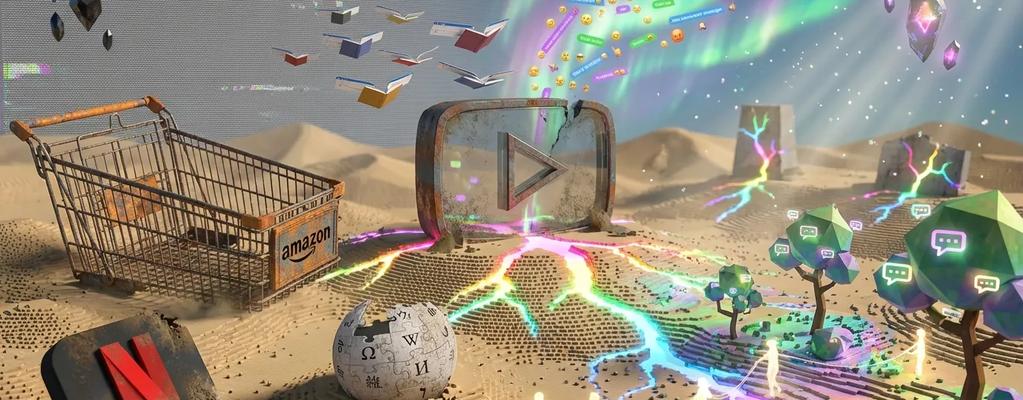
Amazon has 300 million active users. It is a sprawling digital metropolis, buzzing with commerce, logistics, and activity.
Picture a specific product page—let's say, the latest noise-canceling headphones. Right now, at this exact second, thousands of people are looking at that same page. They are reading the same questionable reviews. They are squinting at the same low-resolution images. They are harboring the exact same doubts about battery life or build quality.
In a physical store, this would be a crowd. You would see people nodding, shaking their heads, or asking a clerk for help. You would overhear someone say, "I bought these last week, and the bass is terrible."
But on Amazon? Silence.
Everyone is making a decision alone. Everyone is isolated in their own private instance of the store. Despite the massive foot traffic, the place is empty.
This is the defining paradox of the modern internet. We have built the most heavily trafficked infrastructure in human history, yet we have designed it to feel like a deserted wasteland. We have created digital ghost towns.
The visitors are there—millions of them. But the community is missing. It is time to ask why we settled for a web where we are all ghosts, and how a new wave of website community builder tools is finally bringing these towns to life.
The Ghost Town Phenomenon: High Traffic, No Pulse
The statistics of web engagement paint a stark picture of the web loneliness epidemic.
While global internet traffic continues to skyrocket, meaningful on-site interaction is plummeting. The "90-9-1" rule of internet culture—which posits that 90% of users just lurk, 9% contribute occasionally, and only 1% create content—has largely devolved into the "99-1" rule on most standard websites.
The Death of the Comment Section
Ten years ago, the "comment section" was the primary way we interacted with a website. Today, that feature is endangered. Major publishers, from NPR to The Verge, have shut down their comment sections, outsourcing discussion to X (Twitter) or Facebook.
This has stripped websites of their "third place" status. A news article is no longer a place to gather; it is just a billboard. A store is no longer a market; it is just a vending machine.
The Rise of Passive Consumers
We have been trained to become passive content consumers. The architecture of the web—static HTTP requests serving static HTML—does not natively support browser-based social spaces. To interact, you usually have to leave the page.
This creates a high "interaction cost." If you have a question about a news article, the effort required to screenshot it, open a social app, post it, and wait for a reply is too high. So, you engage in "passive consumption." You read, you leave. The site registers a "hit," but it fails to register a human connection.
The Economic Cost of Disconnected Decisions
This silence is expensive.
- Decision Paralysis: Without real-time validation from peers, shoppers hesitate. This fuels the trillions of dollars lost in cart abandonment.
- Misinformation: Without a live chat browser extension to facilitate immediate fact-checking by the community, false information in articles or product descriptions goes unchallenged for months.
The Living Web Revolution: Turning URLs into Gathering Spaces
The solution to the ghost town problem is not to build more websites. It is to layer a social fabric over the ones we already have.
This is the promise of the social web browsing tool. By decoupling the community from the website owner and placing it in the hands of the user (via the browser), we can turn any URL into a vibrant meeting place.
Transforming Static Pages into Dynamic Rooms
When you use a tool like Poppin, you are essentially activating a "social layer" that transforms a static webpage into a digital town square.
The URL acts as the address for the meeting.
wikipedia.org/wiki/Roman_Empirebecomes a lecture hall.nike.com/new-releasebecomes a line outside a sneaker store.cnn.com/breaking-newsbecomes a bustling café.
The Power of Synchronous Experiences
The key differentiator here is synchronicity. Most web interactions are asynchronous (you leave a review; someone reads it three weeks later). A live chat browser extension enables synchronous connection.
You are connecting with real-time web habitants—people who are sharing your exact context at this exact moment. This creates an interactive web experience that feels alive. The website isn't just serving data; it's hosting a gathering.
This technology allows us to create URL-specific forums instantly, without the permission or technical integration of the host website. We are occupying the digital space and making it our own.
Where Ghost Towns Become Cities: Real-World Scenarios
When we learn how to create instant communities on any website, we unlock utility in places that desperately need human connection but currently offer none.
Here is how specific "ghost towns" can be revitalized into thriving cities:
1. Government Websites: Bureaucracy with a Buddy
Government portals are the ultimate ghost towns: high traffic, high stress, zero community.
- The Problem: You are on the IRS website or a local DMV page, trying to figure out which tax form to download. The language is confusing. You feel isolated and anxious.
- The Solution: You toggle the browser extension for website discussions.
- The Result: You see 300 other confused citizens on the same page. One of them types, "Hey, don't use Form 1040-EZ, they moved it to this link." Instantly, the ghost town becomes a support group. Citizens help citizens navigate the bureaucracy in real-time.
2. Medical Information Sites: The Waiting Room
Sites like WebMD or Mayo Clinic receive millions of visitors, mostly people engaging in "doom-scrolling" about symptoms.
- The Problem: Reading about a medical condition alone is terrifying.
- The Solution: A privacy-first, anonymous chat layer.
- The Result: Patients sharing experiences on the specific page for a condition. "I just had this surgery last week, the recovery isn't as bad as the article says." The sterile webpage becomes a compassionate waiting room.
3. Job Boards: The Applicant's Lounge
LinkedIn and Indeed are lonely places. You apply into a black hole.
- The Problem: You are looking at a job listing for a "Senior Project Manager." Is the salary range fair? Is this company ghosting applicants?
- The Solution: You check the Poppin overlay.
- The Result: Other applicants are discussing the role. "I interviewed with them last month; they focus heavily on Agile methodology," or "Heads up, this listing has been up for 6 months, they might not be hiring." The information asymmetry is fixed.
4. Streaming Platforms: The Global Living Room
We watch Netflix and YouTube alone, even when millions watch the same hit show.
- The Problem: You are watching a shocking season finale. You want to scream, but your room is empty.
- The Solution: You turn any webpage into a chatroom.
- The Result: A watch party that spans the globe. You are reacting to plot twists with fans in Brazil, Japan, and Germany simultaneously. The solitary act of viewing becomes a shared cultural event.
Building Digital Neighborhoods
We are moving away from the "User vs. Interface" era of the web and entering the "User vs. User" era.
This shift isn't just about chatting; it's about building digital neighborhoods. When we allow people to see each other, we create organic accountability and trust. A review is just text; a person in a chat room is a presence.
The future of the web isn't about better algorithms or faster loading speeds. It is about inhabited websites. It is about realizing that the most valuable asset on any webpage isn't the content—it's the people viewing it.
The ghost towns are full. We just need to give the ghosts a voice.
Stop haunting websites - start living in them.
Ready to populate the web? Install Poppin today and turn your browser into a passport to the living internet.